Week of Prayer & Fasting - Day 2 | Confession
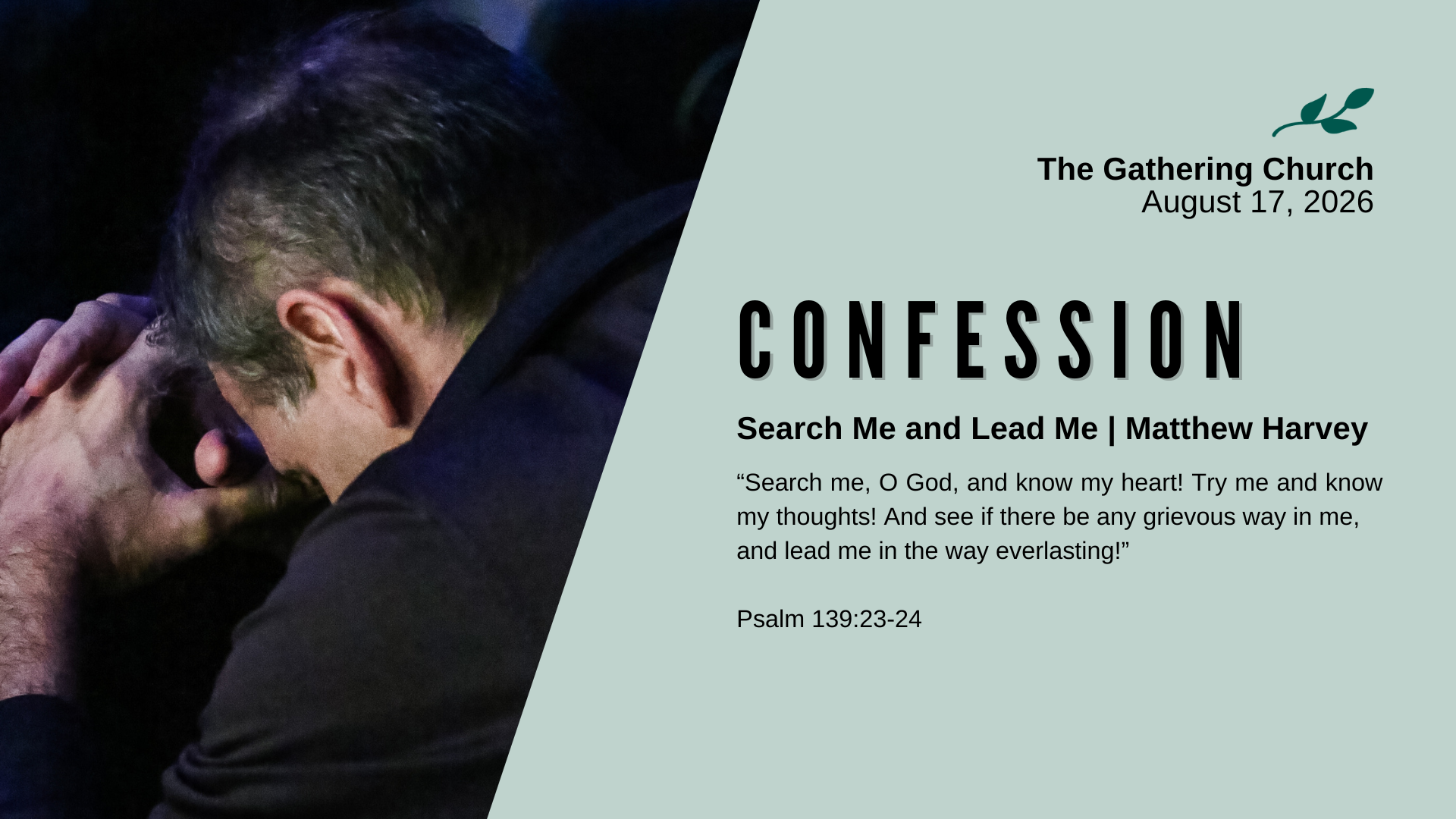
Search Me and Lead Me | Matthew Harvey
"Search me, O God, and know my heart! Try me and know my thoughts! And see if there be any grievous way in me, and lead me in the way everlasting!" - Psalm 139:23-24
That word "search" is worth slowing down on. In Hebrew, it's chaqar— pronounced khah-KAR. It's the same word for prospecting and mining: Job uses it for miners digging into rock and darkness, searching out ore "to the farthest limit." It's not a glance. It's an excavation.
And here's what makes it land: chaqar is the very same word David used in verse 1 — "O LORD, You have searched me and known me." That's not incidental. Verse 1 is a statement of fact: You have already searched me. Verse 23 is a plea: Search me — do it again, do it now. The passive knowing of verse 1 becomes an active, invited excavation by verse 23. David isn't asking God to start something new. He's asking Him to keep doing what He's always done — except now David is the one opening the door, asking God to dig past what's presentable, down to what's actually buried.
That's a dangerous prayer if you don't trust who's doing the digging. But David can pray it precisely because of everything established earlier in the psalm. The One searching his heart is the same One who knit him together before he had a heartbeat. This isn't a hostile inspector looking for a reason to reject him. God isn't searching your life looking for grounds to walk away — He's searching it looking for what needs to be healed, so He can lead you out of it.
That distinction matters more than it might seem. Most of us resist being fully known because somewhere along the way we learned that exposure leads to shame. Say the true thing, and you'll be judged for it. So we manage what gets seen. We curate. We keep the anxious thoughts to ourselves, the wicked ways hidden, the real internal weather unreported — even in prayer.
But David's prayer assumes something different: that being fully known is not the danger. Staying hidden is. Whatever's buried doesn't disappear because it stays private — it just keeps steering from the dark. The invitation to be searched isn't an invitation to condemnation. It's an invitation to correction, which is a form of care.
And notice where the prayer ends. Not "and punish me." Not even "and forgive me," though that's implied. It ends with "lead me in the way everlasting." The goal of the digging isn't exposure for its own sake — it's direction. David isn't asking God to catalog his failures. He's asking to be walked somewhere. The searching is in service of the leading.
That's the whole shape of a transformed life. It doesn't start with trying harder in the dark. It starts with opening the door and asking to be searched — not because you're confident about what will be found, but because you trust the character of the One doing the searching.
So here's the application, plain and practical: where in your life have you been managing what gets seen instead of inviting God to search it? Is there an anxious thought you've kept off-limits, even in prayer? A pattern you've rationalized because naming it honestly feels too costly?
David's prayer gives you a way back in. Not "fix me." Not "hide this from me." Search me. Know me. Dig deep. And lead me somewhere else.
That's not a prayer of fear. That's a prayer of trust — the kind you can only pray once you know who's on the other side of the search. So as we bring our requests to God this week — as we believe Him for what's ahead — let's start there: be willing to let Him search you first.